


How to effectively avoid burrs and slag buildup at the cutting edges in laser cutting of copper products?
Release Time : 2025-12-04
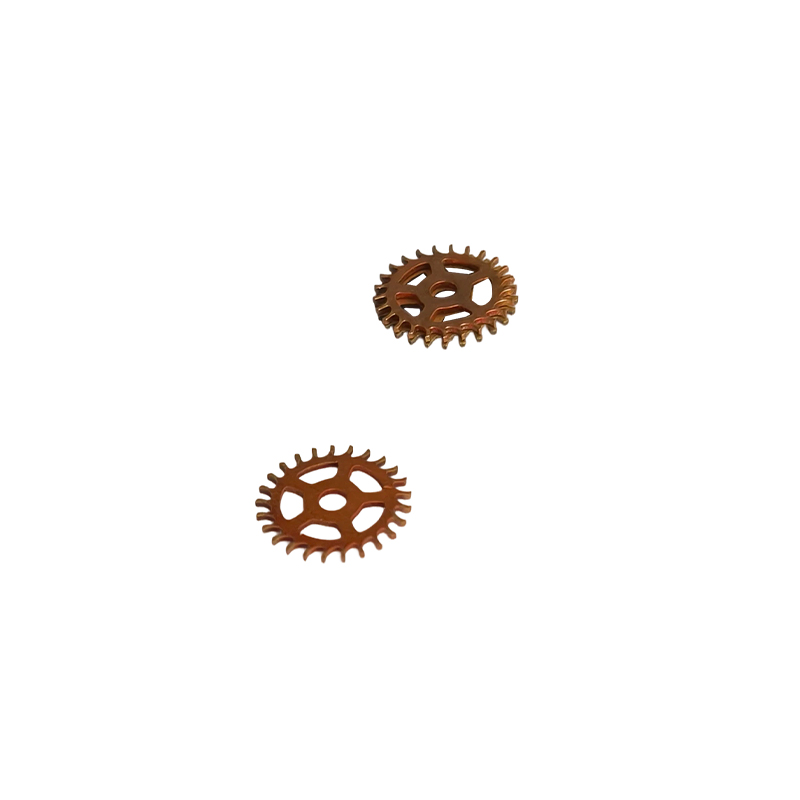
Copper, due to its excellent electrical and thermal conductivity, and ductility, is widely used in electronic heat sinks, radio frequency devices, decorative components, and precision instruments. However, when laser cutting copper products, burrs and slag are easily generated at the cutting edges, affecting not only the appearance quality but also potentially interfering with subsequent assembly, welding, or electrical performance. This problem is particularly pronounced in the processing of high-purity purple copper. To effectively suppress burrs and slag buildup, a systematic optimization is needed from multiple dimensions, including material properties, laser parameters, auxiliary gas, and process strategies.
1. Understanding the Causes: The Dual Challenges of High Reflectivity and High Thermal Conductivity
Copper has extremely high reflectivity to near-infrared lasers, resulting in low initial energy absorption efficiency; this is also far greater than that of stainless steel or carbon steel. This causes the laser energy to rapidly diffuse into the surrounding area, making it difficult to form a stable molten pool locally. When molten metal fails to be blown away from the kerf by the assist gas in time, it will cool and solidify at the lower edge, forming stubborn slag. Furthermore, if the molten metal flows back or cools unevenly at the cutting edge, it is prone to generating tiny protrusions—burrs. Therefore, the core solution to this problem lies in "improving energy coupling efficiency" and "enhancing the ability to expel molten material."
2. Optimizing Laser Parameters: Precisely Controlling Heat Input
First, a laser type suitable for the copper material should be selected. Compared to traditional continuous fiber lasers, pulsed lasers or green lasers are more advantageous. Green wavelengths are more easily absorbed by copper, significantly reducing the risk of reflection and minimizing the heat-affected zone. If using an infrared laser, the peak power needs to be increased, and a high peak value, short pulse width modulation mode should be adopted to achieve "explosive" melting rather than slow conduction. Second, the cutting speed and power should be properly matched. Too slow a speed will lead to overmelting and heat accumulation, exacerbating slag formation; too fast a speed will result in insufficient energy, causing incomplete melting and intermittent burrs. Typically, a "critical cutting window" needs to be determined through process experiments, and a speed slightly higher than the threshold should be used while ensuring penetration.
3. Scientific Selection of Auxiliary Gases: High Pressure + High Purity are Key
Auxiliary gases are not only used to remove molten material but also participate in oxidation reactions or cooling processes. For copper products, high-purity nitrogen is the preferred choice because its inertness prevents oxidation and discoloration, while high pressure effectively removes slag from the bottom of the cut. Gas nozzle design is also crucial: small-aperture, coaxial focusing nozzles should be used to ensure concentrated airflow, high velocity, and direct access to the cutting edge. Some high-end equipment also incorporates a "dual-gas" system—nitrogen protection in the inner layer and air for flow stabilization in the outer layer—further improving slag removal efficiency.
4. Synergistic Material Pre-treatment and Post-treatment
Before cutting, cleaning or applying a light-absorbing coating to the copper plate surface can significantly improve the initial laser absorption rate, reduce reflection loss, and make the cut more stable. In addition, appropriately increasing the plate temperature can reduce melting point differences and improve molten pool fluidity, but care must be taken to avoid excessive oxidation. If trace burrs remain, lightweight post-treatment can be combined: such as vibratory grinding, brush rollers, or low-temperature plasma cleaning, to avoid damage to the fine structure caused by traditional grinding. For demanding applications, online visual inspection systems can be introduced to automatically identify and mark defective areas, achieving closed-loop quality control.
The burr and slag issues in laser cutting of copper products are essentially a reflection of the mismatch between the material's physical properties and the processing technology. By selecting a suitable laser source, optimizing process parameters, enhancing gas assistance, and supplementing with surface management, smooth, clean, and slag-free cutting edges can be obtained without sacrificing efficiency. With the development of green lasers, intelligent process databases, and adaptive control systems, copper laser cutting is moving towards a new stage of high-quality manufacturing characterized by "one-time forming and no post-processing required."
1. Understanding the Causes: The Dual Challenges of High Reflectivity and High Thermal Conductivity
Copper has extremely high reflectivity to near-infrared lasers, resulting in low initial energy absorption efficiency; this is also far greater than that of stainless steel or carbon steel. This causes the laser energy to rapidly diffuse into the surrounding area, making it difficult to form a stable molten pool locally. When molten metal fails to be blown away from the kerf by the assist gas in time, it will cool and solidify at the lower edge, forming stubborn slag. Furthermore, if the molten metal flows back or cools unevenly at the cutting edge, it is prone to generating tiny protrusions—burrs. Therefore, the core solution to this problem lies in "improving energy coupling efficiency" and "enhancing the ability to expel molten material."
2. Optimizing Laser Parameters: Precisely Controlling Heat Input
First, a laser type suitable for the copper material should be selected. Compared to traditional continuous fiber lasers, pulsed lasers or green lasers are more advantageous. Green wavelengths are more easily absorbed by copper, significantly reducing the risk of reflection and minimizing the heat-affected zone. If using an infrared laser, the peak power needs to be increased, and a high peak value, short pulse width modulation mode should be adopted to achieve "explosive" melting rather than slow conduction. Second, the cutting speed and power should be properly matched. Too slow a speed will lead to overmelting and heat accumulation, exacerbating slag formation; too fast a speed will result in insufficient energy, causing incomplete melting and intermittent burrs. Typically, a "critical cutting window" needs to be determined through process experiments, and a speed slightly higher than the threshold should be used while ensuring penetration.
3. Scientific Selection of Auxiliary Gases: High Pressure + High Purity are Key
Auxiliary gases are not only used to remove molten material but also participate in oxidation reactions or cooling processes. For copper products, high-purity nitrogen is the preferred choice because its inertness prevents oxidation and discoloration, while high pressure effectively removes slag from the bottom of the cut. Gas nozzle design is also crucial: small-aperture, coaxial focusing nozzles should be used to ensure concentrated airflow, high velocity, and direct access to the cutting edge. Some high-end equipment also incorporates a "dual-gas" system—nitrogen protection in the inner layer and air for flow stabilization in the outer layer—further improving slag removal efficiency.
4. Synergistic Material Pre-treatment and Post-treatment
Before cutting, cleaning or applying a light-absorbing coating to the copper plate surface can significantly improve the initial laser absorption rate, reduce reflection loss, and make the cut more stable. In addition, appropriately increasing the plate temperature can reduce melting point differences and improve molten pool fluidity, but care must be taken to avoid excessive oxidation. If trace burrs remain, lightweight post-treatment can be combined: such as vibratory grinding, brush rollers, or low-temperature plasma cleaning, to avoid damage to the fine structure caused by traditional grinding. For demanding applications, online visual inspection systems can be introduced to automatically identify and mark defective areas, achieving closed-loop quality control.
The burr and slag issues in laser cutting of copper products are essentially a reflection of the mismatch between the material's physical properties and the processing technology. By selecting a suitable laser source, optimizing process parameters, enhancing gas assistance, and supplementing with surface management, smooth, clean, and slag-free cutting edges can be obtained without sacrificing efficiency. With the development of green lasers, intelligent process databases, and adaptive control systems, copper laser cutting is moving towards a new stage of high-quality manufacturing characterized by "one-time forming and no post-processing required."